 Türkçe

TÜBİTAK 1001 Success from Our Faculty: A Pioneering Step in Hybrid Aerogel Technologies

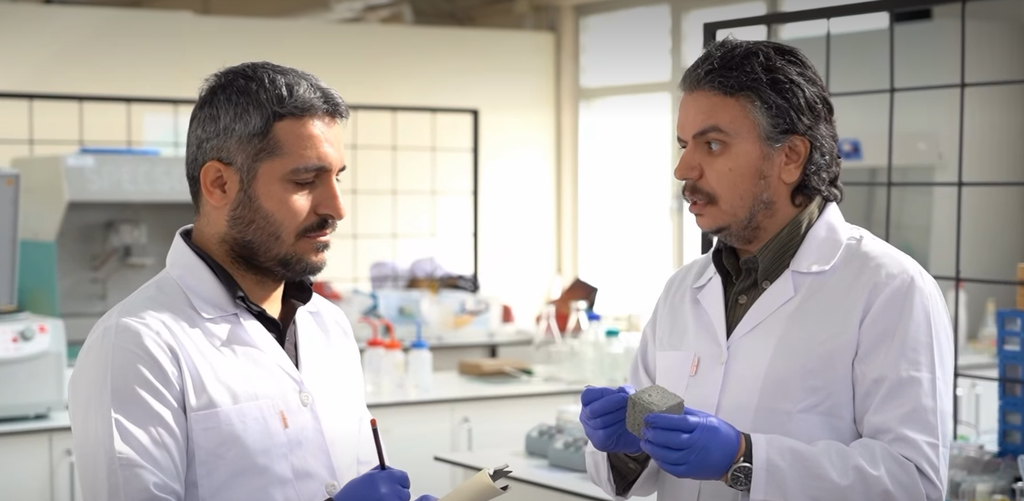
Another scientific project from our faculty has been successfully supported. The project, which focuses on the development of next-generation hybrid aerogel materials capable of absorbing electromagnetic waves and withstanding high-temperature conditions, has been accepted under the TÜBİTAK 1001 – Scientific and Technological Research Projects Support Program. The project is led by Assoc. Prof. Dr. Mustafa Erkartal, a faculty member of our Department of Basic Sciences.
Designed with the aim of developing high value-added nanomaterials, the project involves the integrated design of advanced nanomaterials derived from polymer-based ceramic structures and metal-organic frameworks. The hybrid aerogel systems to be developed are expected to offer a multifunctional material solution that can effectively absorb electromagnetic waves thanks to their porous and ultra-light structures, while maintaining performance under high-temperature conditions.
This research conducted at our faculty introduces an innovative approach to advanced material solutions required in critical fields such as defense industry, aerospace, and space technologies. The developed hybrid aerogel is expected to make significant contributions in areas such as reducing radar signatures, protecting electronic systems from electromagnetic interference, and ensuring safe operating environments in high-power systems. In addition, it is anticipated to play an effective role in applications requiring high-temperature resistance in energy and space technologies.
Project coordinator Assoc. Prof. Dr. Mustafa Erkartal emphasized that modern advanced technological systems operate under both high temperatures and intense electromagnetic interactions, which can lead to critical issues directly affecting system performance. He noted that the developed materials aim to control surrounding electromagnetic waves and improve system efficiency, highlighting their strategic importance, especially in fields where radar technologies are widely used.
This project carried out at our faculty is not limited to defense-oriented applications but also offers wide potential for use in civilian technologies. With objectives such as reducing the negative effects of electromagnetic waves on electronic systems and creating safer operating environments, the study stands out as a significant contribution to Türkiye’s advanced technology production and R&D capacity.
Fotoğraflar